Composition
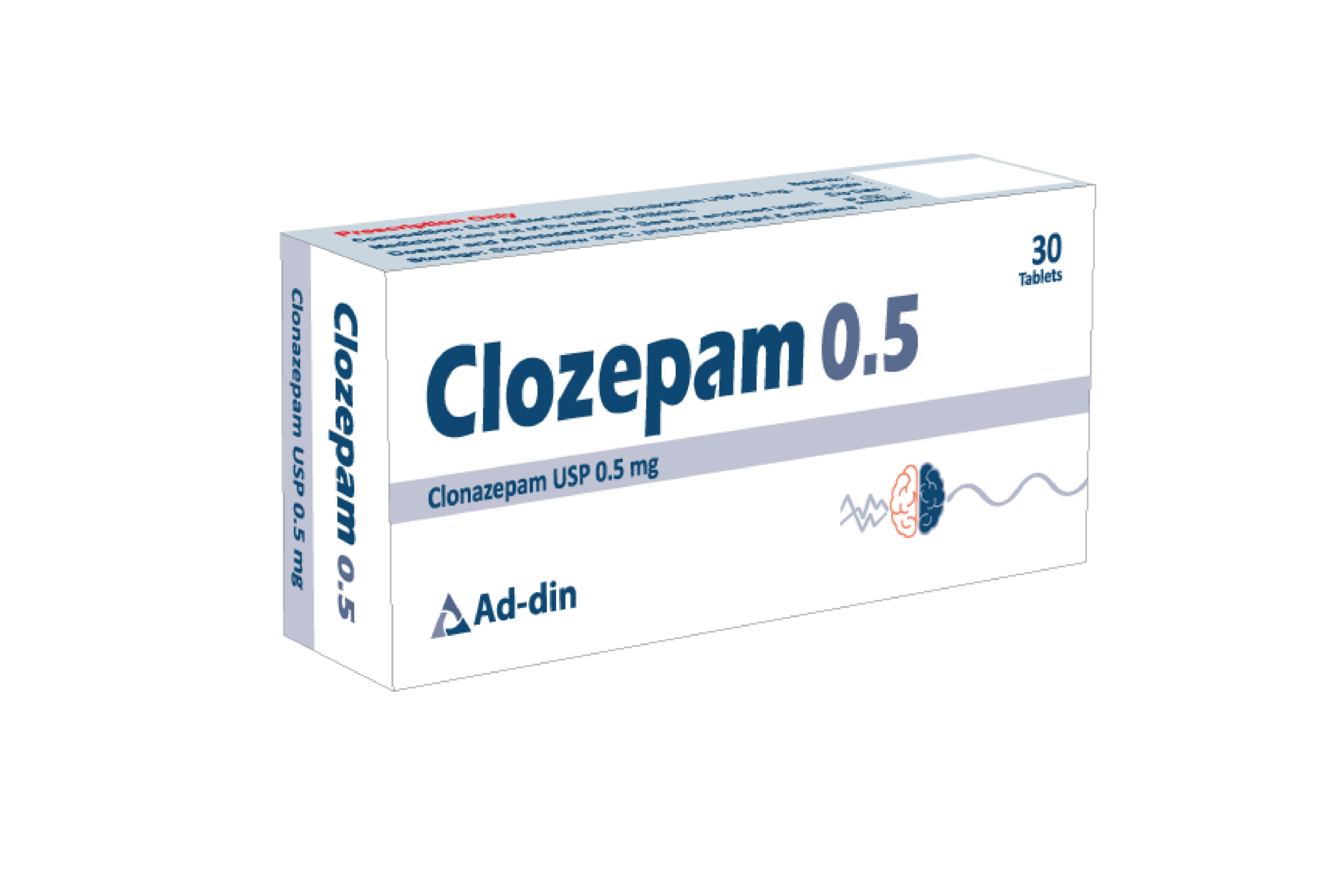
Clozepam 0.5 mg Tablet: Each tablet contains Clonazepam USP 0.5 mg.
Pharmacology
Clozepam (clonazepam) has pharmacological properties similar to those of the benzodiazepine group of drugs. Clozepam (clonazepam) has sedative, hypnotic, and anticonvulsant properties. It works directly in the brain by calming abnormal electrical activity.
Clozepam (clonazepam) functions by enhancing the activity of gamma-aminobutyric acid (GABA), the brain’s primary inhibitory neurotransmitter responsible for reducing nerve cell excitability. Specifically, the drug binds to the benzodiazepine site on GABA-A receptors, increasing the receptor’s affinity for GABA and boosting the efficiency of its signals. This action triggers the opening of ligand-gated chloride channels, allowing an influx of chloride ions that makes neurons more negative and significantly harder to fire.
Clozepam (clonazepam) is rapidly and nearly completely absorbed following oral administration, achieving approximately 90% absolute bioavailability and reaching peak plasma concentrations within 1 to 4 hours. Once absorbed, the drug distributes very rapidly throughout body tissues, particularly targeting brain structures, and exhibits an 82% to 86% plasma protein binding capacity. Clozepam (clonazepam) undergoes extensive hepatic metabolism primarily via the cytochrome P-450 3A4 enzyme, which converts it into pharmacologically inactive or weakly active metabolites. These metabolites are ultimately excreted through the body, with 50% to 70% eliminated in urine and 10% to 30% in feces, while maintaining a steady mean elimination of half-life of 30 to 40 hours regardless of the administered dose.
Indication
Clozepam (Clonazepam) is primarily indicated for the management of seizure disorders and panic disorders.
Seizure Disorders: Myoclonic seizures, Akinetic seizures, Absence seizures (petit mal), Lennox-Gastaut Syndrome (petit mal variant).
Psychiatric Disorders: Indicated for the acute treatment of panic disorder, with or without agoraphobia, characterized by unexpected panic attacks and associated worry regarding future attacks.
Dosage and Administration
|
Indication |
Age | Initial Daily Dose | Maintenance Daily Dose |
Maximum Daily Dose |
| Seizure Disorders (Epilepsy) |
Children (Infants up to 10 years or ≤80 kg) | 0.01 mg to 0.03 mg/kg
(divided into 2-3 doses) |
0.1 mg to 0.2 mg/kg
(in divided doses) |
0.2 mg/kg per day |
| 10 to 16 years of age | 1 mg to 1.5 mg
(divided into 2-3 doses) |
3 mg to 6 mg
(in divided doses) |
Individualized | |
| Adults | 0.5 mg to maximum 1.5 mg (divided into 3 doses) | 3 mg to 10 mg (individualized
based on response) |
Maximum 20 mg/day | |
| Elderly (≥65 years) | 0.25 mg to 0.5 mg (start at lowest possible dose) | Individualized based on
tolerance |
Use with caution | |
| Panic Disorder | Under 18 years of age | No clinical trial experience established for pediatric panic disorder | ||
| Adults (18-64 years) | 0.25 mg twice daily
(Total: 0.5 mg/day) |
Usually 1 mg/day (Target dose; up to 2 mg/day in divided doses) | 4 mg/day (in
exceptional cases) |
|
| Elderly (≥65 years) | 0.125 mg to 0.25 mg twice
daily (lowest possible start) |
Individualized based on
tolerance |
Use with caution |
Special Patients Guidance
| Patients | Guidance |
| Mild to Moderate Hepatic Impairment | Use the lowest effective dose and monitor closely |
| Severe Hepatic Impairment | Contraindicated |
| Renal Impairment | Use with caution due to possible metabolite accumulation |
| Patients Receiving Other Anticonvulsants | Monitor for increased CNS depression and adverse effects |
| Long-term Therapy | Dose should be individualized and periodically reassessed |
Contraindication
Clonazepam is contraindicated for the patients who are hypersensitive to this drug or other benzodiazepines or to any ingredient in the formulation. It is also contraindicated for patients with severe respiratory insufficiency, as well as for patients with severe hepatic impairment, as benzodiazepines may precipitate hepatic encephalopathy. Clonazepam is also contraindicated for patients with sleep apnea syndrome for the treatment of panic disorder.
Warning and Precaution
Using clonazepam with opioid medications, other central nervous system depressants, or alcohol can cause profound sedation, severe breathing problems, coma, and death. Stopping clonazepam abruptly, especially after high doses or long-term use, can trigger status epilepticus (life-threatening seizures), severe muscle pain, hallucinations, and extreme anxiety. Regular use of clonazepam, even at regular prescribed therapeutic doses, can lead to physical and psychological dependence (addiction). Clonazepam heavily slows down the central nervous system. This impairment can directly cause heavy sedation, muscle weakness, and temporary memory loss. Avoid driving a motor vehicle, operating heavy machinery, or engaging in hazardous occupations during the first few days of starting treatment. Patients with a history of depression and/or suicide attempts should be kept under close supervision.
Side Effects
Common Side Effects of Clonazepam are as follows: Extreme Drowsiness & Fatigue, Loss of Balance (Ataxia), Behavioral Disruption, Physical Symptoms like Muscle weakness, dizziness, and a noticeable increase in saliva production.
Clonazepam should be discontinued, and immediate medical attention should be sought if any of the following undesirable effects occur:
- Severe Allergic Reactions: Sudden red skin rashes, hives, intense itching, swelling of the lips, tongue, face, or throat, wheezing, or extreme shortness of breath.
- Paradoxical Psychological Reactions: Sudden rages, aggressive behavior, delusions, vivid nightmares, or seeing and hearing things that are not actually there (hallucinations).
- Organ Dysfunctions: Signs of liver changes (yellowing of the skin/eyes, dark urine) or blood disorders (unusual fever, severe sore throat, or unexpected bruising).
Drug-Drug Interaction
Taking clonazepam with certain other medications can dangerously increase side effects or reduce treatment effectiveness.
- Opioids and Pain Relievers: Morphine, codeine, tramadol, or fentanyl. Concomitant use can cause excessive sedation and potentially life-threatening respiratory depression.
- Other Sedatives: Sleeping pills, muscle relaxants, anti-anxiety medications, sedating antihistamines, or antipsychotic drugs can significantly increase the risk of severe sedation, impaired consciousness, and coma.
- Other Anti-Seizure Medications: Phenytoin, phenobarbital, carbamazepine, or valproate may affect the metabolism and blood levels of clonazepam, potentially reducing its effectiveness. Conversely, the combination of valproic acid and clonazepam may, in some cases, induce a continuous seizure state known as absence status.
Drug-Food Interaction
- Alcohol: Concomitant use of alcohol and clonazepam can enhance the effects of both substances, increasing the risk of excessive sedation, impaired coordination, and potentially life-threatening respiratory depression.
- Grapefruit Juice: Grapefruit juice or grapefruit may affect the metabolism of clonazepam and potentially increase its concentration in the body.
Use in Pregnancy and Lactation
Based on preclinical studies, it cannot be excluded that clonazepam may cause congenital malformations. Epidemiological evaluations provide evidence that anticonvulsant drugs act as teratogens. However, it is difficult to determine from published epidemiological reports which drug or combination of drugs is responsible for defects in the newborn. Other factors, such as genetic factors or the epileptic condition itself, may be more important than drug therapy in leading to birth defects. Under these circumstances, the drug should be administered to pregnant women only if the potential benefits outweigh the risk to the fetus.
During pregnancy, clonazepam may be administered only if there is a compelling indication. Administration of high doses in the last trimester of pregnancy or during labor can cause irregularities in the unborn child’s heartbeat and hypothermia, hypotonia, mild respiratory depression, and poor feeding in the neonate. It should be borne in mind that both pregnancy itself and abrupt discontinuation of the medication can cause exacerbation of epilepsy. Withdrawal symptoms in newborn infants have occasionally been reported with benzodiazepines.
Although the active ingredient of clonazepam has been found to pass into the maternal milk in only small amounts, mothers undergoing treatment with this drug should not breastfeed. If there is a compelling indication for clonazepam, breastfeeding should be discontinued.
Use in Children
Clonazepam can cause excessive accumulation of mucus and saliva in the upper airways of children. This may be particularly dangerous for young children or those with mental disabilities who have difficulty swallowing. Children should be monitored closely for signs of choking, coughing, or severe airway obstruction.
Use in Geriatrics
Older adults metabolize and eliminate medications more slowly due to age-related changes in organ function. Elderly patients should be started on the lowest possible initial dose and require close monitoring. This population is at a significantly increased risk of severe confusion, impaired balance, sudden falls, and serious bone fractures.
Overdose
If there is an overdose of Clonazepam, immediate medical attention is advised. Overdose may cause severe drowsiness, loss of coordination, slurred speech, reduced reflexes, difficulty breathing, low blood pressure, cardiorespiratory depression, loss of consciousness, or coma. Treatment is mainly supportive and includes close monitoring of breathing, heart rate, and blood pressure. Activated charcoal may be considered in appropriate cases if treatment is started soon after ingestion. Gastric lavage is not routinely recommended, and inducing vomiting is generally not advised.
Storage
Store below 30°C, protect from light and moisture. Keep out of the reach of children.
Packaging
Clozepam 0.5 tablet: Each box contains 30 tablets in blister pack.