Composition
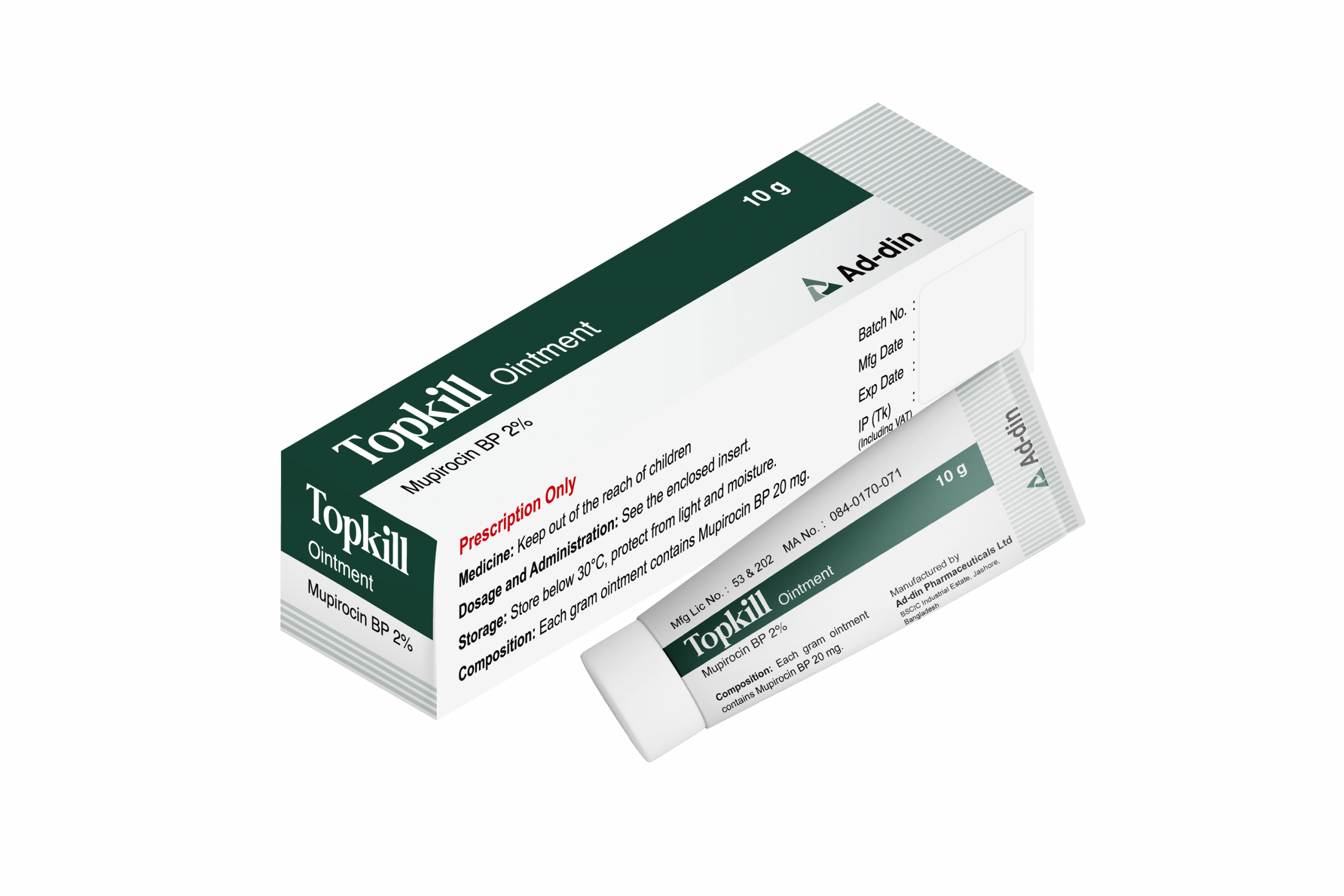
Each gram ointment contains Mupirocin BP 20 mg.
Pharmacology
Topkill (Mupirocin) is a topical antibacterial agent, active against those organisms responsible for the majority of the skin infections, e.g. Staphylococcus aureus, including methicillin- resistant strains, other staphylococci and streptococci. It is also active against gram- negative pathogens, such as E.coli and Haemophilus influenzae. Topkill (Mupirocin) is bactericidal at concentrations achieved by topical administration. However, the Minimum Bactericidal Concentration (MBC) against relevant pathogens is generally eight- fold to thirty- fold higher than the Minimum Inhibitory Concentration (MIC).
Indication
Topkill ointment is indicated for the topical treatment of impetigo due to Staphylococcus aureus and Streptococcus pyogenes. It is also indicated in folliculitis and furunculosis.
Dosage and Administration
A small amount of Topkill ointment should be applied to the affected area three times daily up to 10 days or as directed by the registered physician.
Contraindication
Mupirocin ointment is contraindicated in patients with a history of hypersensitivity reactions to Mupirocin or any of the components of the preparation.
Warning and Precaution
Mupirocin ointment is not for ophthalmic use, so care should be taken during use on the face. If hypersensitivity reaction or chemical irritation occurs with the use of Mupirocin ointment, treatment should be discontinued and appropriate alternative therapy for the infection instituted. As with other antibacterial products, prolonged use may result in overgrowth of non-susceptible organisms, including fungi. Mupirocin ointment is not formulated for use on mucosal surfaces. Intranasal use has been associated with isolated reports of stinging pain and drying. Polyethylene glycol can be absorbed from open wounds and damaged skin and is excreted by the kidneys. In common with other polyethylene glycol-based ointments, Mupirocin ointment should not be used in conditions where absorption of large quantities of polyethylene glycol is possible, especially if there is evidence of moderate or severe renal impairment.
Side Effects
The following local side effects have been reported in connection with the use of Mupirocin ointment: burning, stinging or pain in 1.5% of patients; itching in 1% of patients; rash, nausea, erythema, dry skin, tenderness, swelling, contact dermatitis in less than 1% of patients.
Use in Pregnancy and Lactation
This drug should be used during pregnancy only if clearly needed. It is not known whether this drug is excreted in human milk. Because many drugs are excreted in human milk, caution should be exercised when Mupirocin ointment is administered to a nursing woman.
Drug Interaction
The effect of the concurrent application of Mupirocin ointment and other drugs has not been studied.
Overdose
The overdose of Mupirocin is not dangerous. Consult a doctor on an urgent basis if someone inadvertently swallows the ointment.
Storage
Store below 25°C, protect from light and moisture. Keep out of the reach of children.
Packaging
Each tube contains 10 g ointment.